
Ontology as Factorisation
Ontologies aren’t just knowledge maps — they’re mathematical compressions. By defining meaningful classes and relationships, you’re factorising high-dimensional data into a lower-dimensional conceptual space. This selective abstraction turns raw information into structured insight, giving AI systems clarity and focus.

A Pause for Thought
After years of rapid breakthroughs, AI’s exponential curve seems to be catching its breath. But this isn’t a slowdown — it’s a strategic pause. With generative AI reaching a 'good enough' baseline, now is the moment to focus on structure, meaning, and human-guided scaffolding through knowledge graphs.
The Bowtie Pattern
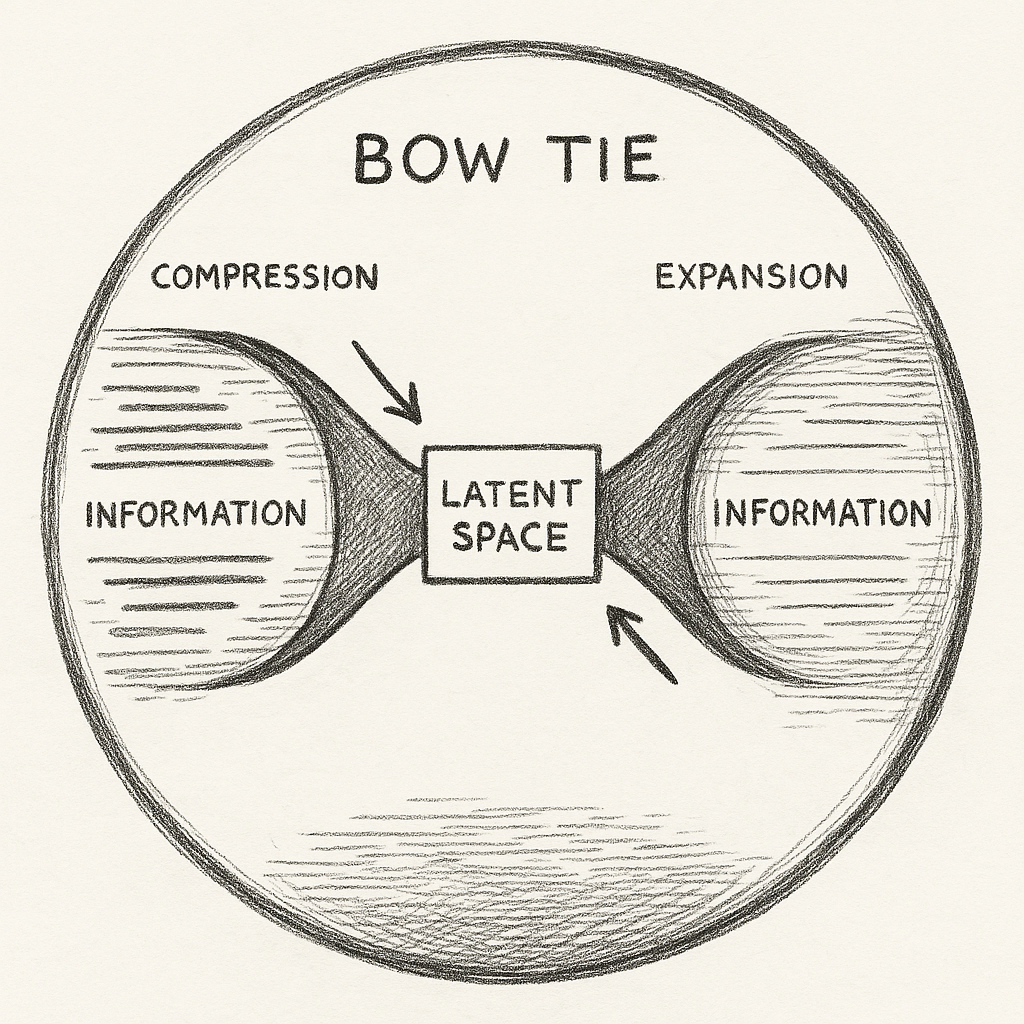
The "Bowtie" pattern shows up across learning systems — from neural networks to organisational ontologies — where vast information is compressed into core abstractions, then expanded into new insights. This process of compression and generalisation is key to building intelligent, adaptable systems.

What is an Ontology?
Ontologies are the next step beyond schemas and knowledge graphs — flexible, logical frameworks that define meaning, enable reasoning, and power intelligent AI systems. Learn how they transform static data into structured knowledge.

ARC-AGI-2: The New Benchmark That Redefines AI Reasoning
Explore ARC-AGI-2, François Chollet’s groundbreaking benchmark for artificial general intelligence, and discover why symbolic reasoning and Knowledge Graphs are key to the next era of AI progress.
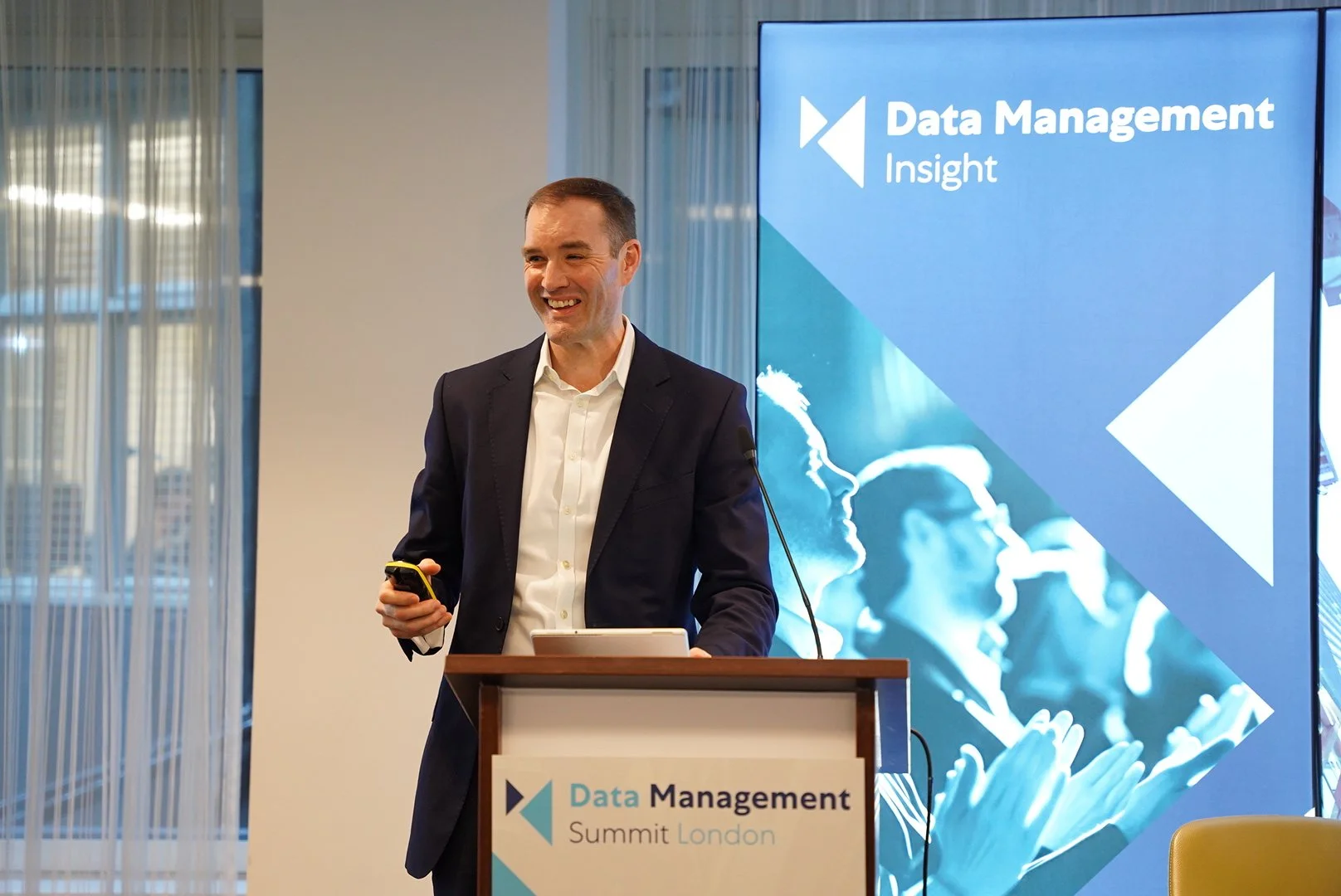
From Fractured Data to Connected Insights: Lessons from the Data Management Summit
Insights from the Data Management Summit London: why organisations must connect their data, embrace knowledge graphs, and define their ontological core to thrive in the AI era.

Transforming How Organisations See Data
Discover how large language models and knowledge graphs are transforming the way organizations leverage both structured and unstructured data. Learn how linking insights back to core business systems can unlock new capabilities and strategic advantages.

Graphs & GPUs
Graph analytics is critical in domains such as social network analysis, logistics, and cybersecurity. NetworkX is one of the most popular Python libraries in this space, widely appreciated for its ease of use and comprehensive collection of algorithms. However, as graph datasets increase in size and complexity, NetworkX’s CPU-based computations become a significant bottleneck, leading to slow processing times.

What is a Triple?
One of the simplest yet most powerful ways to structure information is with a triple.
A triple is exactly what it sounds like: a unit of data broken into three parts - subject, predicate, and object. Think of it like a bite-sized fact. For example:
🔹 Subject: Big Ben
🔹 Predicate: is located in
🔹 Object: London
This seemingly basic structure is the foundation of knowledge graphs - those sprawling networks of interconnected facts that power everything from Google Search to a new breed of AI assistants.

Why Use a Knowledge Graph?
In the AI arms race, data isn’t just fuel - it’s the architecture for the intelligence you train. Yet most enterprises still rely on 20th-century data architectures for 21st-century intelligence. Your CRM is a vault of customer interactions, your ERP tracks orders, and your analytics tool crunches numbers - each a walled garden. AI is meant to be the brain that connects them all, but it can’t - because these systems weren’t designed for AI.

What Is A Knowledge Graph?
In a simple graph, an edge between two nodes just means "these things are connected." In a knowledge graph, the edges say how and why they are connected.
Let’s expand our example. Suppose Alice isn’t just a person - she’s a doctor. She works at a hospital. That hospital is located in London and specialises in cardiology. Instead of an undifferentiated mess of connections, we now have semantics - explicit labels that tell us what each node and edge means.
This is what turns a graph into a knowledge graph: it captures relationships, categories, and meanings. It understands that a person isn’t the same as a company, and that "works at" is different from "has visited."

DeepSeek R1
What does DeepSeek mean for enterprises? The release of DeepSeek’s R1 model has caused shockwaves. This feels like a pivotal moment - demonstrating how constraints can drive innovation while also hinting at the economic and geopolitical 'mega-event' looming on the horizon. Beyond its clever efficiency gains, R1 underscores two critical trends that enterprises should heed: the rise of open-source AI and the irreplaceable value of high-quality data.

Don’t Panic
For the last couple of years, many dismissed AI as another overhyped tech trend. But that phase is coming to an end. Organisations are racing through the denial stage, accepting that AI is real, and now grappling with the sheer scale of its impact. And for knowledge-intensive industries - as well as those providing software as a service - that realisation often leads to full-blown panic.

The Data Crunch
As AI accelerates through the economy, organisations with poorly integrated data systems will begin to show cracks. Disparate but entangled data quality issues will lead to unreliable AI insights and a loss of trust. Within a ten-year timeframe, many organisations may crumble under the strain of their fragmented infrastructures, losing relevance as their specific intelligence fades into the background intelligence of larger foundational models.

Reasoning Will Fall
OpenAI’s o3 model has set new highs in significant benchmarks—and that's a game-changer for all of us. If AI can reason, code, and excel in maths and science, it’s only a matter of time before it starts reshaping tasks critical to nearly every business. Let’s dive into how o3 performed on key benchmarks:
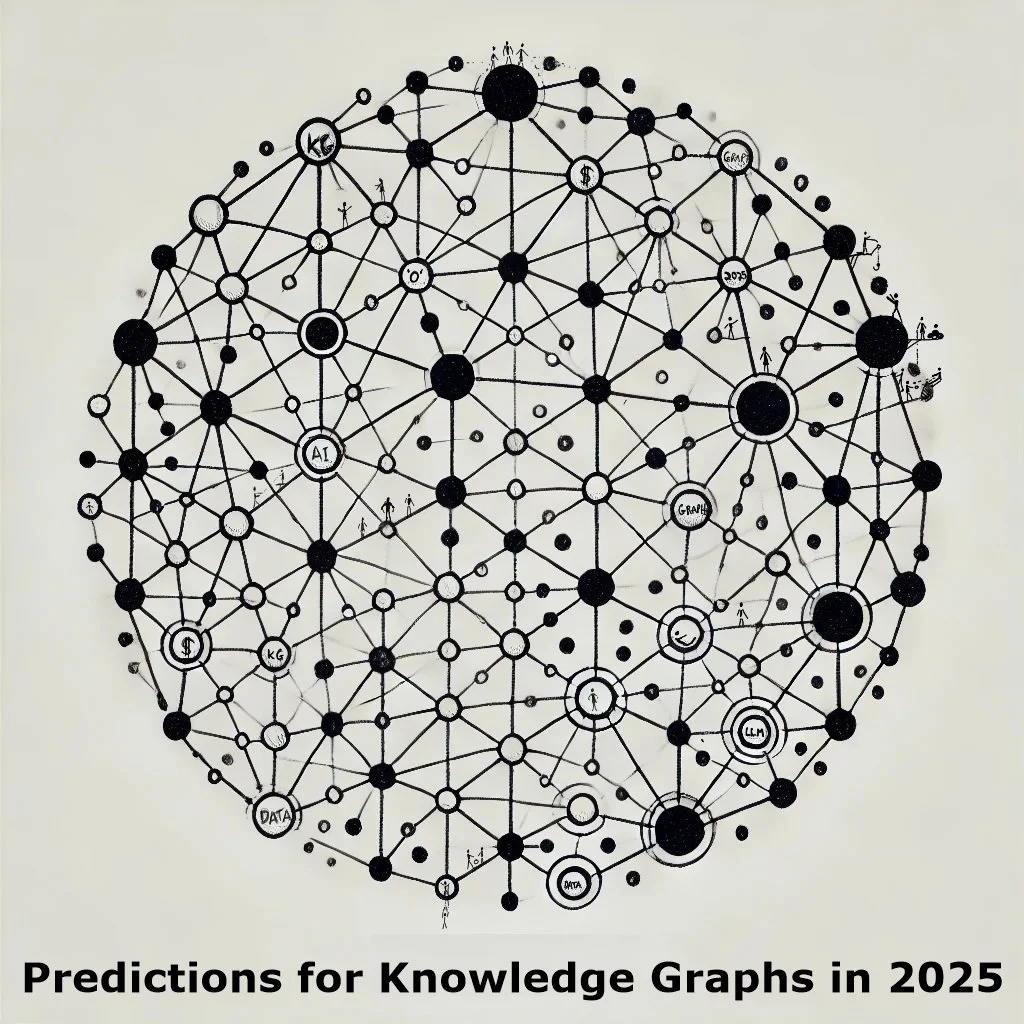
Predictions For 2025
Here are The Knowledge Graph Guy’s predictions for Knowledge Graphs in 2025!. These trends underscore the increasing strategic importance of Knowledge Graphs as a cornerstone for GenAI adoption in 2025.

Your Ontology - Your IP
An ontology is like a map of your organisation’s knowledge, built on the concepts and relationships that define your domain. Think of it as your company’s DNA—a compressed representation of what you know and how you think. When developed properly, your ontology doesn’t just support your AI; it becomes a core piece of your intellectual property.

Simulations vs Models
Models aim to capture the essence of a system, preserving its logic and structure in a way that enables reasoning, prediction, and deeper understanding. A simulation, on the other hand, mimics the observable behaviour of a system without necessarily representing its underlying structure or logic. While both are valuable, they serve different purposes: models aim to explain and understand, whereas simulations focus on reproducing and predicting.

Turing Machine 2.0
A Virtual Knowledge Graph effectively becomes the Turing Machine’s “tape”—a dynamic, interconnected memory that the LLM can read from and write back to. By linking facts with URLs and using ontology for generalisation and compression, this graph provides an ideal read/write memory structure for the LLM. Combined in a neural-symbolic loop, this LLM+Graph system could even be Turing complete.

Organisational Intelligence
For Artificial Intelligence to be successfully integrated into an organisation, it must build upon and amplify the existing unartificial intelligence within that organisation.
Artificial Intelligence works through data and computation. To use AI to improve Organisational Intelligence, it must make the organisation's internal model of the world more cohesive. It must achieve this by enhancing collaboration and knowledge sharing between people through data and computational insights. It must empower Collective Intelligence to achieve Organisational Intelligence.